Management Information System (MIS)

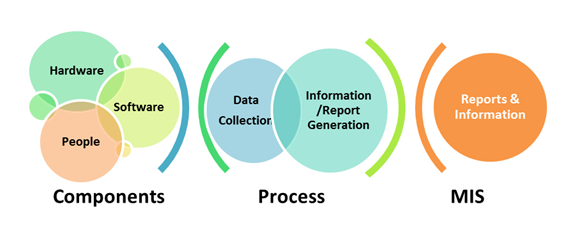
As we know, a management information system
is essentially a framework, which organizations use to govern their own
operations. During the operation, absolutely the organizations need systems to
manage content and access so many data which are computers or maybe gadgets and internet connection
because it helps them to manage accurately and fast in both of internal and
external tasks.
Based on http://pc-os.org/helpfulmanagementinformationsystems/,
the MIS is divided into:
1. Decision Support Systems
It focuses on businesses and governments to manage decisions, compile information about various phenomena and make informed decisions.
2. Executive Information Systems
An executive information system summarizes data from a wide range of departments under their supervision and presents it in intelligible form for these executives. Examples of such distinct departments might include accounting, operations and human resources.
3. Transaction Processing Systems
A transaction processing system is primarily meant to handle the information derived from routine transactions that occur in high volumes. For example, a supermarket typically uses such a system to track their own inventories. They also use these systems to develop data about their sales. Any business might use such a system to manage payroll. Banks use them to keep track of deposits.
4. Marketing Information Systems
Marketing systems in this area help businesses specifically to find, store and analyze data about marketing and distribute it to managers who make the decisions about these matters. The nature of the data found in such a system differs from other data in that it is focused on shaping the future actions of the business.
5. School Information Management System
Schools are excellent examples of non-business institutions which need these systems in order to function properly. The school systems in managing information can be used in conjunction with the community to allow parents and others to have access to certain segments of information that pertain to their child.

Because the MIS is very complicated, it
needs the media to operate and manage the data. The most important things are
computers (it may be the server computers) which include hardware and software also internet connection. In this
case, the MIS covers hypertext, hypermedia, and multimedia. They are the media
to share information through online and offline system.

Based on Farkas, hypertext and hypermedia
refer to web pages and other kinds of on-screen content that employ hyperlinks
(or simply called “links”). Hypertext refers to the use of links to present
text and static graphics such as like e-paper (websites and blog) and e-book,
while hypermedia refers to the presentation of pictures, videos, animations,
and audios such when you surf on youtube.com or soundcloud.com. Then, they are
connected to links, so we can look for information, listen to music, watch
video, purchase products, upload and download applications. Therefore, websites
nowadays are entirely hypertexts.

Based on Loretto, multimedia is the media combination not only in computers but also other media such as gadgets to share information and it may entertain people without connecting
internet. It may use computers or gadgets to present texts, audios, videos, animations, interactive
features, and images in various ways.
Video
Conclusion:
Nowadays, technology globally has changed people’s
behavior. In fact, it can be used positively to develop our knowledge in
sharing and searching information. As a would-be teacher, I will use the
technology to get the positive advantages to teach students. For example, I can
download pictures, audios, and videos to help improve the students’ ability
especially in the four skills of English. Those media may help them interested
in learning English through their creativity, or at least they are able to find
their passion to develop their strength through using the technology. Sources:
- http://www.sjsu.edu/isystems/
- http://www.pc-os.org/helpful-management-information-systems/
- http://vincentpage.blogspot.com/
- http://www2.iath.virginia.edu/elab/hfl0037.html
- http://faculty.washington.edu/farkas/dfpubs/Farkas-Hypertext%20And%20Hypermedia.pdf
- http://www.iicm.tugraz.at/0x811bc82b_0x0005f59f
- http://www.rc.au.net/papers/www-0595/wwwhype2.html
- http://www.cs.cf.ac.uk/Dave/ISE_Multimedia/node10.html
- http://internships.about.com/od/internshipsquestions/g/whatismultimedia.htm
- http://dzs.ffzg.unizg.hr/text/mfll.pdf


Komentar
Posting Komentar